

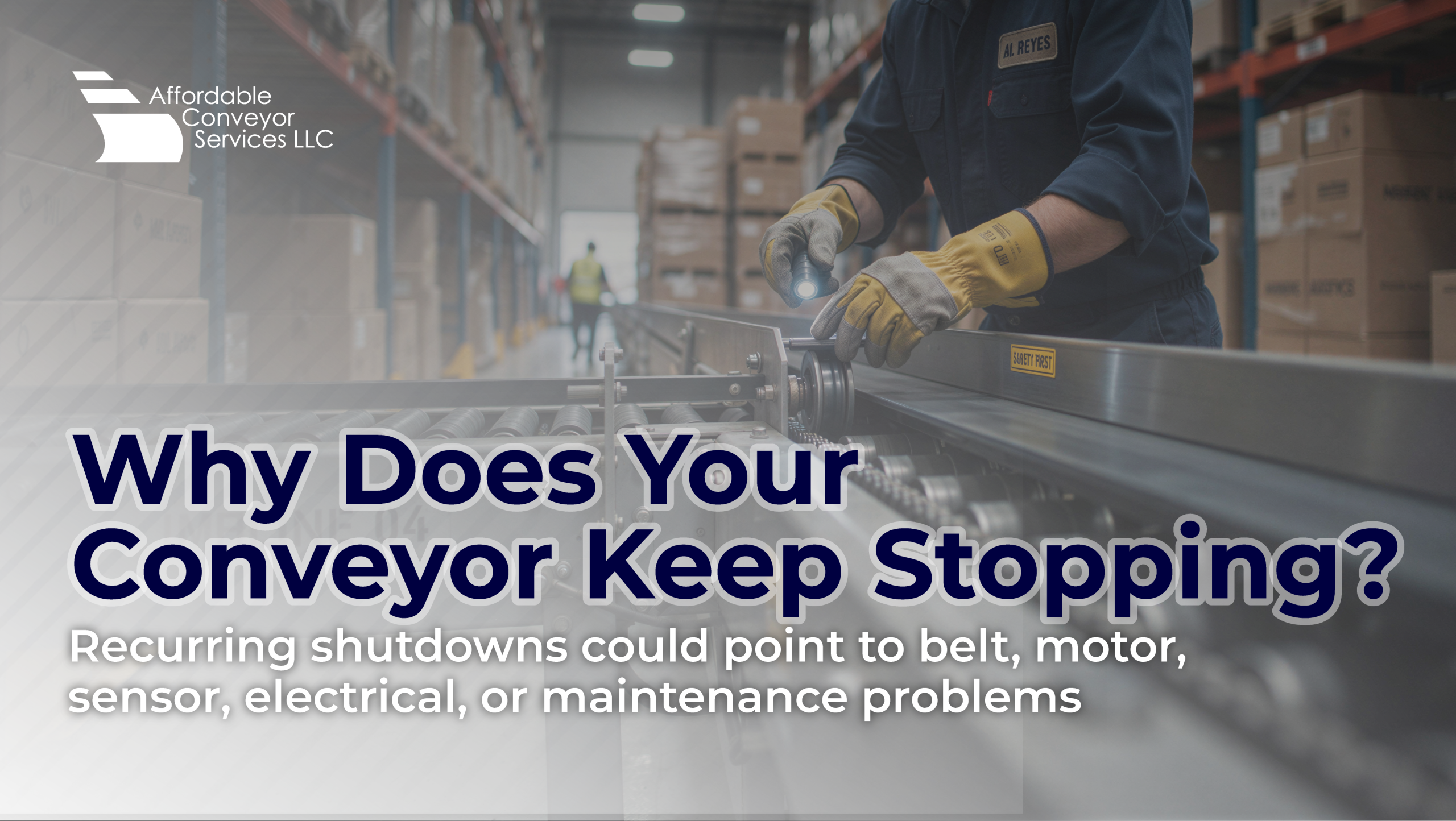
Why Does My Conveyor Keep Stopping? 7 Common Causes of Repeated Conveyor Shutdowns
Repeated conveyor stoppages are more than an inconvenience. Finding the real cause can help your facility reduce downtime, protect equipment, and keep production moving.
A conveyor that stops once may have a simple explanation. A conveyor that keeps stopping is telling you something.
Repeated shutdowns can interrupt production, slow fulfillment, create backups, and put additional pressure on employees who are trying to keep operations moving. Even when your team gets the conveyor running again, simply resetting the system may not address the underlying problem.
For warehouses, distribution centers, manufacturing facilities, packaging operations, and other businesses that depend on material handling equipment, identifying the cause early can help prevent a small problem from becoming a much larger repair.
Here are seven common reasons conveyor systems experience repeated shutdowns—and what your facility should watch for.
1. Belt Tracking or Alignment Problems
A conveyor belt should remain properly centered as it moves through the system. When it begins drifting toward one side, the problem can create friction, uneven wear, and operational interruptions.
Common signs include:
- A belt consistently pulling to one side
- Frayed or damaged belt edges
- Material spilling from the conveyor
- Frequent manual belt adjustments
- Unusual rubbing or scraping sounds
Repeatedly correcting the belt without determining why it is moving off-center may only provide temporary relief.
The underlying problem could involve tension, pulleys, rollers, idlers, loading conditions, or another component affecting how the belt travels.
2. Worn or Seized Rollers
Rollers help material move smoothly through many conveyor systems. When they become worn, damaged, dirty, or unable to rotate correctly, resistance increases.
A failing roller can contribute to:
- Slow conveyor movement
- Product jams
- Excessive vibration
- Unusual noises
- Increased strain on other components
One damaged roller may appear minor, but ignoring it can place additional stress on the belt and surrounding equipment.
If the same area of a conveyor repeatedly experiences problems, inspecting the rollers and bearings can help identify whether mechanical resistance is contributing to the shutdown.
3. Motor or Drive Problems
The motor and drive system provide the power necessary to keep the conveyor moving. When these components begin struggling, operators may notice performance changes before the conveyor completely stops.
Warning signs may include:
- Difficulty starting
- Intermittent shutdowns
- Reduced conveyor speed
- Overheating
- Unusual motor noise
- Problems occurring when the conveyor is heavily loaded
A motor problem does not always mean the motor itself needs replacement. The issue could involve excessive load, mechanical resistance, electrical components, or other parts of the drive system.
That is why troubleshooting the complete system is important.
4. Sensor Issues
Modern conveyor systems often rely on sensors to detect products, control movement, communicate between zones, and support automated processes.
A dirty, damaged, poorly positioned, or malfunctioning sensor can create unexpected conveyor stops even when the mechanical equipment appears to be functioning normally.
The system may incorrectly detect:
- A product jam
- An occupied conveyor zone
- Improper product positioning
- A safety condition
- A missing item
If employees frequently have to reset the same area of an automated conveyor, sensors should be part of the troubleshooting process.
5. Electrical or Controls Faults
Not every conveyor shutdown begins with a mechanical problem.
Electrical components and controls play an essential role in how powered and automated conveyor systems operate. A fault within the controls can cause intermittent stops that may be difficult to diagnose without proper troubleshooting.
Possible warning signs include:
- Frequent system resets
- Controls responding inconsistently
- Conveyor zones stopping unexpectedly
- Motors failing to start
- Recurring fault messages
- Shutdowns with no obvious mechanical obstruction
Affordable Conveyor Services provides both mechanical repair and electrical and controls troubleshooting, allowing technicians to evaluate more than just the visible symptoms when a system repeatedly stops.
6. Material Jams and Product Flow Problems
Sometimes the conveyor itself is capable of operating correctly, but the way products are moving through the system creates repeated problems.
Items that are oversized, improperly positioned, unstable, or entering the conveyor inconsistently can lead to jams.
If jams repeatedly occur in the same location, the problem may involve:
- Transfers between conveyor sections
- Product spacing
- Guides or rails
- Conveyor speed
- Accumulation
- Changes in product size or packaging
Repeated jams should not simply become part of the daily routine. They may indicate that the conveyor needs adjustment, repair, or modification.
7. Worn Components and Deferred Maintenance
Conveyor systems contain numerous components working together. Belts, bearings, rollers, drives, pulleys, and other moving parts naturally experience wear over time.
When maintenance is delayed, several small problems can begin affecting the system at once. This can result in a conveyor that seems unpredictable—running properly one day and shutting down repeatedly the next.
Warning signs worth paying attention to:
- Vibration
- Strange noises
- Belt tracking problems
- Heat buildup
- Reduced throughput
- Repeated jams
Why Resetting the Conveyor Isn't Always the Solution
When operations are busy, the fastest response is often to clear the problem, reset the conveyor, and get production moving again.
That makes sense in the moment.
But if the same conveyor keeps stopping, repeated resets can hide a bigger issue.
Why does this keep happening?
A professional conveyor inspection can evaluate the system beyond the immediate fault.
Instead of only addressing what caused today's shutdown, troubleshooting can identify worn components, alignment problems, control issues, or other conditions that may be contributing to repeated failures.
When Should You Call a Conveyor Repair Technician?
You do not necessarily need to wait until the conveyor completely fails.
Consider professional service when:
- The same shutdown happens repeatedly
- Employees are making frequent adjustments
- Belt tracking problems keep returning
- The conveyor begins making unfamiliar noises
- Product jams become more frequent
- System performance noticeably decreases
- Electrical faults or control resets continue
- Components show visible wear or damage
Early troubleshooting can make it easier to perform targeted repairs before the problem becomes more disruptive.
Keep Your Conveyor System Moving with Affordable Conveyor
A recurring shutdown should not become a normal part of your operation.
Affordable Conveyor Services supports facilities with conveyor troubleshooting, mechanical repairs, belt service, electrical and controls troubleshooting, inspections, preventive maintenance, and emergency repair.
Affordable Conveyor also provides 24/7 emergency conveyor support when unexpected breakdowns threaten operations.
Contact Affordable ConveyorFrequently Asked Questions
Why does my conveyor keep shutting off?
Repeated shutdowns can result from belt tracking problems, worn rollers, motor or drive issues, sensors, electrical faults, product jams, or worn components. Proper troubleshooting can help identify the actual cause.
Should I keep resetting a conveyor that stops?
A reset may restore operation temporarily, but recurring shutdowns should be investigated. Frequent resets can indicate an unresolved mechanical, electrical, or controls problem.
Can a bad sensor stop an entire conveyor?
Yes. Depending on the system, a sensor problem can trigger stops or prevent a conveyor zone from operating correctly.
When should I call a conveyor repair company?
If the same problem keeps returning, performance is decreasing, or you notice unusual noises, vibration, tracking problems, jams, or control faults, professional troubleshooting is recommended.
Does Affordable Conveyor offer emergency repairs?
Yes. Affordable Conveyor provides 24/7 emergency conveyor support in addition to routine repairs, maintenance, inspections, and troubleshooting.