
Conveyor Belt Tracking Problems: Why Your Belt Keeps Moving Off-Center
A conveyor belt that constantly drifts to one side can signal a larger system problem. Understanding what causes mistracking can help prevent belt damage, product loss, and unexpected downtime.
A conveyor belt should travel consistently through the system. When it begins pulling toward one side, rubbing against the conveyor structure, or requiring constant adjustment, it is easy to assume the belt simply needs to be realigned.
Sometimes it does.
But when tracking problems keep returning, the belt itself may not be the real problem.
Conveyor belt mistracking can be caused by several conditions throughout the system, including incorrect tension, roller problems, pulley alignment, uneven loading, buildup, and worn components.
What Is Conveyor Belt Tracking?
Belt tracking refers to how well a conveyor belt remains centered as it moves across rollers and pulleys.
Ideally, the belt should travel along its intended path without consistently drifting toward either side of the conveyor. When the belt begins moving away from that path, it is commonly referred to as mistracking.
Common signs of a tracking problem include:
- Belt edges rubbing against the frame
- Frayed or damaged edges
- Uneven belt wear
- Material spilling from one side
- A belt repeatedly moving left or right
- Frequent tension or tracking adjustments
- Unusual sounds while the conveyor operates
If these symptoms continue after adjustment, there may be an underlying system condition causing the belt to move off-center.
Why Does My Conveyor Belt Keep Moving to One Side?
There is rarely one universal cause. Several parts of the conveyor influence how a belt travels. The key is identifying which condition is pushing the belt away from its proper path.
1. Incorrect Belt Tension
Proper tension helps the belt maintain consistent contact with the conveyor's pulleys and rollers. If tension is uneven, too loose, or otherwise incorrect, the belt may struggle to remain centered.
A loose belt can slip or wander, while uneven tension across the belt can encourage it to move toward one side.
The solution is not simply to tighten the belt as much as possible. Excessive tension can also increase stress on components. The goal is proper, balanced tension for the specific system.
2. Pulley Alignment Problems
Pulleys have a major influence on belt movement.
If a pulley is not correctly aligned with the conveyor structure, the belt may naturally begin traveling toward one side. Even a relatively small alignment issue can become noticeable over a long conveyor run.
When tracking problems appear suddenly after maintenance, component replacement, or system modifications, pulley alignment may be worth checking.
3. Damaged, Worn, or Seized Rollers
Rollers help support the belt and maintain smooth movement. When a roller becomes damaged, contaminated, worn, or unable to rotate properly, it can create resistance on one section of the belt.
This uneven resistance may gradually pull the belt away from the center.
- Rollers that do not rotate freely
- Visible wear
- Buildup around rollers
- Unusual vibration
- Noise from specific conveyor sections
Replacing or servicing the affected component can sometimes resolve a tracking issue that repeated belt adjustments could not.
4. Material Buildup
Dust, debris, packaging material, product residue, and other contaminants can accumulate around conveyor components.
Over time, that buildup can change how the belt contacts rollers and pulleys. If buildup is concentrated on one side, it can contribute to uneven belt movement.
Keeping critical components clean can therefore be an important part of preventing tracking problems, particularly in facilities where debris or product residue is common.
5. Uneven or Off-Center Loading
How products enter the conveyor matters.
When material consistently lands on one side of the belt rather than near the intended loading area, the uneven force can encourage the belt to move away from its correct path.
If tracking problems primarily occur while the conveyor is loaded—but seem less noticeable when it is empty—the loading process should be evaluated.
- Product placement
- Transfer points
- Guides
- Chutes
- Product size
- Conveyor speed
Correcting product flow may improve belt tracking without repeatedly adjusting the belt itself.
6. Conveyor Structure or Component Alignment
A belt depends on the components around it being properly positioned.
If the conveyor frame, idlers, rollers, or related components are out of alignment, the belt may continue drifting despite multiple adjustments.
This is one reason persistent belt tracking problems require a broader inspection. Technicians may need to determine whether the belt is reacting to another part of the conveyor rather than causing the problem itself.
7. A Worn or Damaged Belt
Sometimes the belt has already suffered enough wear that maintaining proper tracking becomes difficult.
- Damaged edges
- Tears
- Uneven wear
- Stretching
- Splice problems
- Visible surface damage
Depending on the condition, the belt may be repairable or may require replacement.
Affordable Conveyor's belt repair process includes evaluating the belt and surrounding system conditions, then checking underlying factors such as pulley alignment, tensioning, take-up, and idlers to reduce the chance of the same failure returning.
Why You Shouldn't Ignore Conveyor Belt Mistracking
A belt that is slightly off-center may not seem like an urgent problem, especially if the conveyor is still moving products.
However, continued mistracking can lead to additional problems. The belt may rub against surrounding components, increasing wear along the edges. Material may begin spilling. Rollers and other components can experience additional stress.
What begins as an alignment issue can eventually affect:
- Belt condition
- Conveyor components
- Product flow
- Facility cleanliness
- Throughput
- Overall equipment reliability
Addressing the problem early is typically much easier than waiting until the belt or another component fails.
Why Does My Belt Keep Going Out of Alignment After We Adjust It?
This is one of the most important questions facility teams can ask.
If employees continually adjust the belt and the same issue returns, the adjustment may be treating the symptom instead of the cause.
The actual problem may be:
- A seized roller
- Incorrect tension
- Pulley misalignment
- Uneven loading
- Material buildup
- Worn components
Until that condition is corrected, the belt may continue drifting.
Professional conveyor troubleshooting looks beyond the location where the belt appears to be moving incorrectly and evaluates the system conditions influencing it.
When Is It Time for Professional Conveyor Belt Service?
Consider having your system evaluated when the belt:
- Requires frequent tracking adjustments
- Consistently moves toward the same side
- Is developing damaged or frayed edges
- Creates product spillage
- Makes unusual rubbing noises
- Shows uneven wear
- Continues mistracking after maintenance
- Causes repeated conveyor shutdowns
The sooner the underlying problem is identified, the better the chance of preventing additional damage.
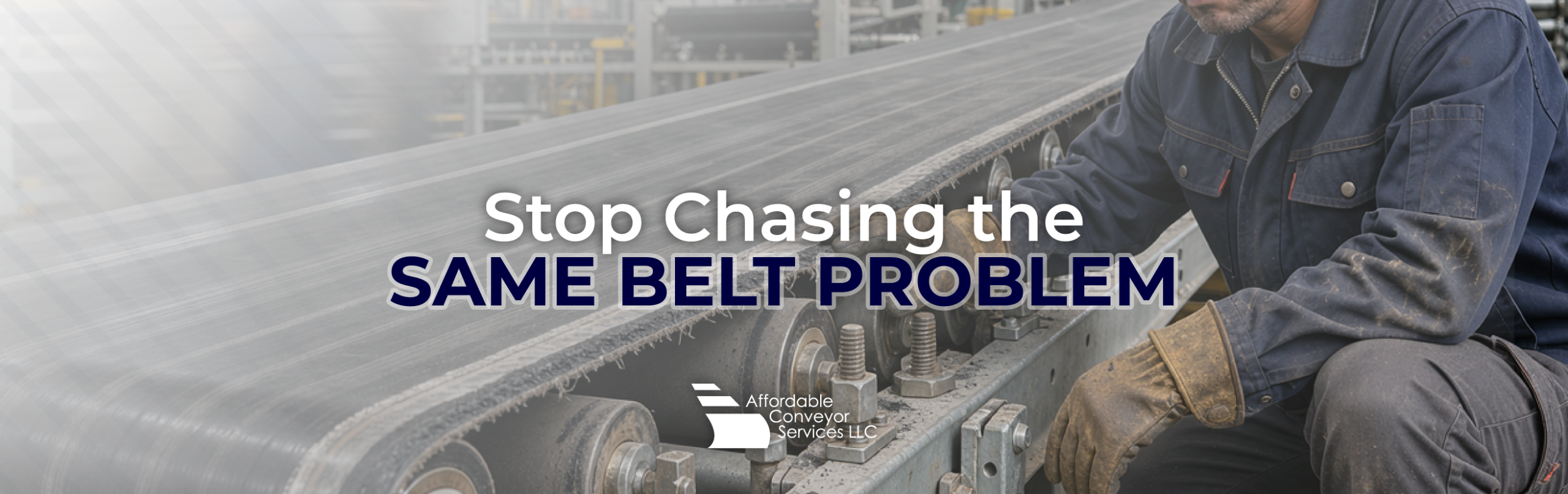
Stop Chasing the Same Belt Problem
At Affordable Conveyor Services, conveyor support includes belt tracking adjustments, repairs, component replacement, preventive maintenance, inspections, mechanical service, and troubleshooting for the broader material handling system.
Instead of repeatedly moving the belt back into position, the goal is to determine why it keeps moving out of position in the first place.
Is your conveyor belt constantly drifting or requiring adjustment? Let Affordable Conveyor Services identify the cause and get your system tracking correctly again.
Contact UsFrequently Asked Questions
What causes a conveyor belt to move to one side?
Common causes include incorrect tension, pulley or roller alignment, damaged rollers, uneven loading, buildup, worn components, or belt damage.
Can I adjust conveyor belt tracking myself?
Minor adjustments may be handled by trained facility personnel, but recurring mistracking should be properly diagnosed. Frequent adjustments can indicate a larger mechanical issue.
Does a conveyor belt need replacement if it won't track correctly?
Not necessarily. The problem may come from another conveyor component. The belt and surrounding system should be inspected before deciding whether repair or replacement is necessary.
Why does my conveyor belt track correctly when empty but move when loaded?
Uneven loading or product placement may be influencing the belt. Transfer points, guides, product positioning, and other loading conditions should be evaluated.
Can Affordable Conveyor repair or replace conveyor belts?
Yes. Affordable Conveyor provides belt repair, splicing, tracking adjustments, replacement, and troubleshooting of surrounding components that may contribute to repeated belt problems.