
How to Choose the Right Conveyor Maintenance Company for Your Facility
Not all conveyor service providers are built the same. Here's what experienced facility managers look for — and what they've learned to avoid.
Already Know What You Need?
Our Southington, CT team services facilities across Connecticut and New England — scheduled maintenance, emergency repair, and everything in between.
The Right Maintenance Partner Keeps Your Operation Moving
A conveyor system failure doesn't just stop a belt — it stops your entire operation. Whether you run a distribution center in Hartford County, a manufacturing plant in New Haven, or a fulfillment facility anywhere in New England, unplanned downtime costs you money every minute it continues.
Choosing the right conveyor maintenance company is one of the most operationally significant decisions a facility manager makes. Yet most facilities don't evaluate their service provider until something breaks. By then, the leverage is gone.
This guide covers the criteria that matter, the questions worth asking before you sign anything, and the red flags that experienced facility managers have learned to spot early.
- What qualifications and certifications to require
- How to evaluate response time and emergency availability
- The difference between reactive, preventive, and predictive service models
- Questions to ask before signing a maintenance agreement
- Red flags that signal an inexperienced or underequipped provider
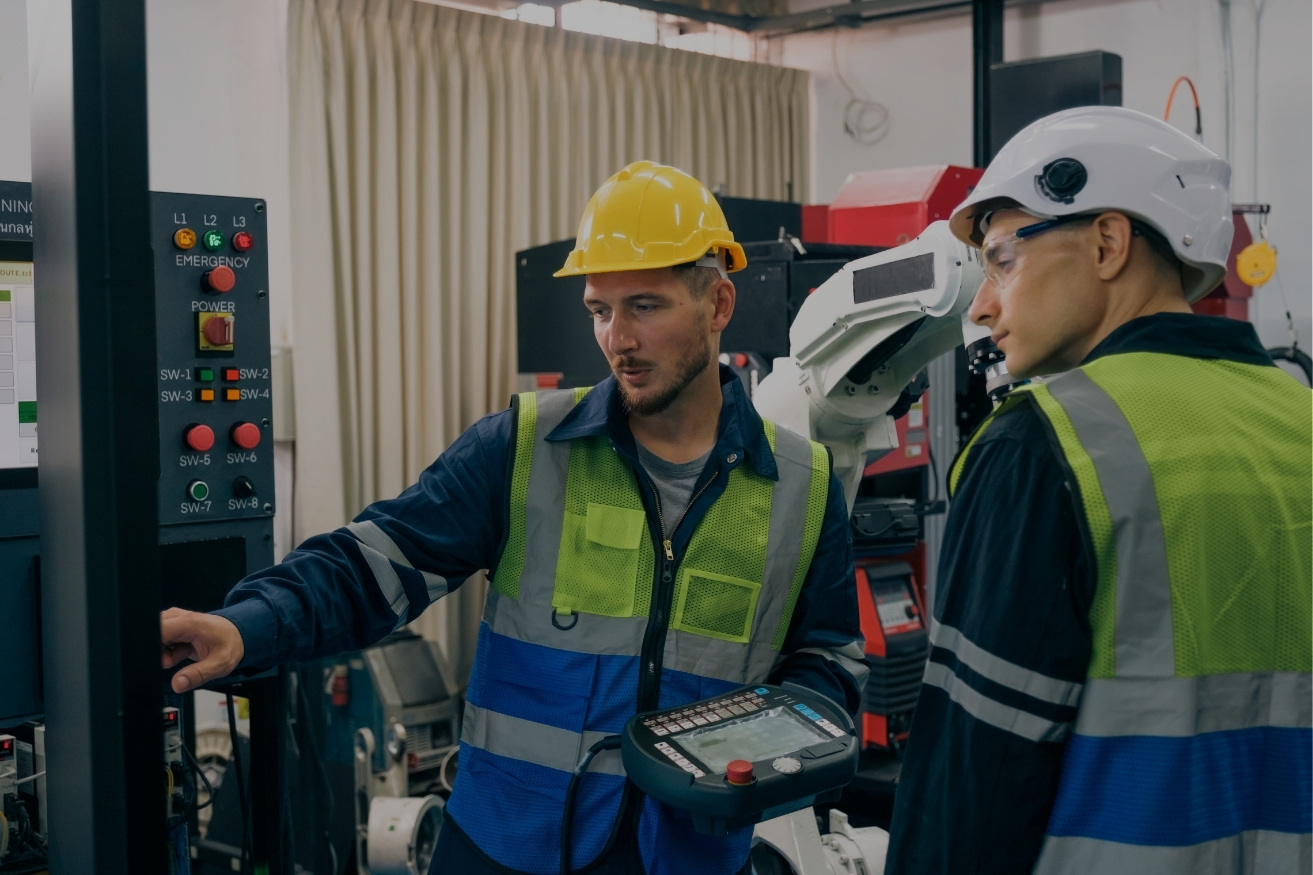
6 Things That Separate Good Conveyor Maintenance Companies from Great Ones
These are the criteria facility managers consistently point to when evaluating maintenance providers — before they need emergency service.
Response Time & 24/7 Availability
A maintenance company that only operates business hours is a liability for any operation running second or third shifts. Confirm emergency availability in writing — not just on their website. Ask what their actual average response time is for critical breakdowns, and whether that response includes a technician on-site or just a phone call.
Experience with Your System Type
Conveyor systems vary significantly — belt, roller, overhead chain, VRC, automated sortation — and so does the expertise required to service them. A provider experienced with gravity roller systems in a small warehouse may not be equipped for a high-speed automated fulfillment line. Ask specifically about experience with your equipment manufacturer and system configuration.
Scope of Services Offered
The best maintenance partners handle everything from routine lubrication and belt tracking to electrical diagnostics, motor replacement, and structural repairs. A provider with limited scope forces you to manage multiple contractors — creating gaps in accountability and slower response when failures cross disciplines. Look for a single-source repair and maintenance provider.
Structured Preventive Maintenance Programs
Any qualified provider should offer a documented preventive maintenance program — not just break-fix service on demand. This means scheduled inspections at defined intervals, written service reports after each visit, and a clear plan for tracking component wear over time. If a company can't show you a sample maintenance schedule, that's a concern.
Emergency Repair Capability
Emergency availability and emergency capability are different things. Confirm that the provider dispatches technicians with parts inventory — not just a diagnostic visit followed by a parts order. Ask whether they stock common wear items like belts, bearings, rollers, and motor components, or whether every repair requires waiting on a supplier.
Local Presence vs. National Coverage
National conveyor service companies offer broad coverage but often route calls through regional dispatch centers, adding response time when it matters most. A locally based provider — like our team operating out of Southington, CT — can put a technician on-site faster and builds facility-specific knowledge over repeated visits. Both models have merit; the priority is knowing which your operation actually needs.
Questions to Ask — and Red Flags to Watch For
Questions to Ask Before Signing
- What is your average on-site response time for emergency breakdowns?
- Do your technicians carry common replacement parts in their service vehicles?
- What types of conveyor systems have you serviced in the last 12 months?
- Can you provide a sample preventive maintenance schedule and inspection checklist?
- Do you provide written service reports after every visit?
- How do you handle repairs that require parts not in stock?
- Are your technicians trained for OSHA lockout/tagout (LOTO) compliance?
- Can you provide references from facilities similar to ours?
Red Flags That Signal the Wrong Provider
- No documented maintenance program — only on-call break-fix service
- Can't provide written service reports or maintenance history records
- Every repair requires waiting days for parts to be ordered and shipped
- No clear answer on emergency response time or after-hours availability
- Technicians unfamiliar with your specific system manufacturer or configuration
- No references from comparable industrial or distribution facilities
- Vague or verbal-only service agreements with no defined scope
- No mention of OSHA compliance, LOTO procedures, or safety protocols
Reactive vs. Preventive vs. Predictive Maintenance
Understanding how a provider approaches maintenance tells you everything about their philosophy — and how much unplanned downtime you're likely to experience.
Break-Fix Service
Service is performed only after a failure occurs. No scheduled inspections, no wear tracking, no proactive part replacement. This model minimizes upfront cost but maximizes downtime risk — especially in high-throughput operations where every hour of outage carries real financial consequence. Best suited only for non-critical, low-usage systems.
Scheduled Maintenance Programs
Service is performed at defined intervals — daily, weekly, monthly, quarterly — regardless of current equipment condition. Tasks include lubrication, alignment, tension checks, and component inspections. This model catches developing issues before they become failures and is the industry standard for any operation where uptime is critical. Ask your provider for a preventive maintenance plan tailored to your system.
Condition-Based & Predictive Service
Service is triggered by real-time data — infrared thermography to detect heat buildup in bearings, ultrasonic testing to find internal delamination, magnetic flux leakage to locate cord breaks in steel belts. This model minimizes unnecessary maintenance while catching failures before they happen. It requires investment in monitoring technology and a provider with NDT capability.
Explore Our Conveyor Maintenance Services
Frequently Asked Questions
What is the maintenance of a conveyor system?
Conveyor system maintenance is a comprehensive upkeep strategy involving scheduled cleaning, lubrication, alignment, tension adjustments, and part replacement to ensure system longevity and safety. Key tasks include tracking adjustments, bearing lubrication, inspecting drive components, and verifying the integrity of splices and rollers. A qualified maintenance company will provide both routine scheduled service and 24/7 emergency repair when needed.
What are typical preventive maintenance tasks for conveyor systems?
Common preventive maintenance tasks include checking belt tension and alignment, inspecting rollers and idlers for wear or seizure, verifying splice integrity, monitoring drive motors and gearboxes, lubricating bearing points per manufacturer specifications, and ensuring all safety guards are in place. These tasks are organized into daily, weekly, monthly, and quarterly intervals based on system usage and operating conditions.
How often should conveyor systems be inspected?
Inspection frequency varies by component. Daily checks cover visual walkthroughs, belt tracking, and emergency stop functionality. Weekly checks address roller spin tests, belt tension, and lubrication. Monthly inspections include deeper structural checks, pulley lagging assessment, and electrical connections. Quarterly and annual audits assess overall system integrity, drive chain wear, and full-load performance. High-throughput operations running around the clock may require compressed inspection intervals — our team at Affordable Conveyor can help you build a schedule based on your specific system.
What are the 5 types of preventive maintenance?
The five common types are: (1) Time-Based — scheduled at calendar intervals regardless of condition; (2) Usage-Based — triggered by run-time hours or production cycles; (3) Condition-Based — performed when monitoring data reaches a defined threshold; (4) Predictive — uses sensors and diagnostics like infrared thermography or ultrasonic testing to anticipate failure; and (5) Risk-Based — focuses resources on the most operationally critical assets. Most industrial facilities use a combination of time-based and condition-based approaches.
What is a planned preventive maintenance programme?
A planned preventive maintenance programme is a structured framework that defines what maintenance will be performed, when it will occur, and who is responsible. It is built around equipment manufacturer recommendations, historical performance data, and facility-specific operating conditions. An effective programme uses documented checklists, work orders, and often a computerized maintenance management system (CMMS) to track service history and schedule upcoming tasks. Ask any prospective maintenance provider to show you a sample programme before committing.
How do I know if my conveyor system needs emergency repair?
Signs requiring immediate attention include complete system stoppage, loud grinding or squealing from bearings or rollers, visible belt damage such as tears or severe mistracking, burning smell from motors or drives, and any condition creating an immediate safety hazard. When these symptoms appear, operations should stop and a qualified technician contacted immediately. Affordable Conveyor Services offers 24/7 emergency conveyor repair across Connecticut and New England — call (860) 342-8753 any time.
What should I look for in a local conveyor maintenance company?
Key criteria include 24/7 emergency availability, documented experience with your specific conveyor type and industry, the ability to provide both scheduled preventive maintenance and reactive repair, local proximity for fast response times, references from similar facilities, and OSHA-compliant lockout/tagout practices. A qualified company should assess your system, document its current condition, and propose a maintenance plan tailored to your operational demands — not a one-size-fits-all agreement. See our full repair and maintenance services for what that looks like in practice.
Connecticut's Trusted Conveyor Maintenance Partner
From structured preventive maintenance programs to same-day emergency repair, our Southington-based team is built to keep your operation running — on your schedule, at any hour.
Talk to our team
Request a service consultation or reach us directly — we respond fast.
24/7 Direct Line (860) 342-8753