
Distribution Center Conveyor Systems: Installation, Maintenance & Repair for High-Volume Operations
Belt, roller, sortation, pallet, and accumulation systems — designed, installed, and supported for the throughput demands of modern distribution centers and fulfillment operations.
Running a Distribution Center That Needs Conveyor Support?
Affordable Conveyor Services handles the full lifecycle — installation, preventive maintenance, and 24/7 emergency repair — for distribution centers and fulfillment operations across Connecticut and New England.
Distribution Center Conveyor Systems Are a Different Category of Demand
A conveyor system in a distribution center doesn't just move product — it is the operation. Every hour a sortation line is down, parcels aren't shipping. Every hour a pallet conveyor is misaligned, receiving slows. Every hour a belt is mistracking, your labor costs go up while throughput goes down.
Distribution centers run at a different level of intensity than most industrial facilities. The equipment requirements are more complex, the maintenance intervals are tighter, and the cost of unplanned downtime is significantly higher than in a lower-throughput environment. A conveyor system built and maintained for that context is fundamentally different from a standard warehouse setup.
Affordable Conveyor Services has been designing, installing, and maintaining conveyor systems for distribution centers and high-volume fulfillment operations across Connecticut and New England since 2003. Our team understands the throughput targets, integration requirements, and maintenance demands that DC-scale operations run on — and we support the full lifecycle from day one through long-term uptime.
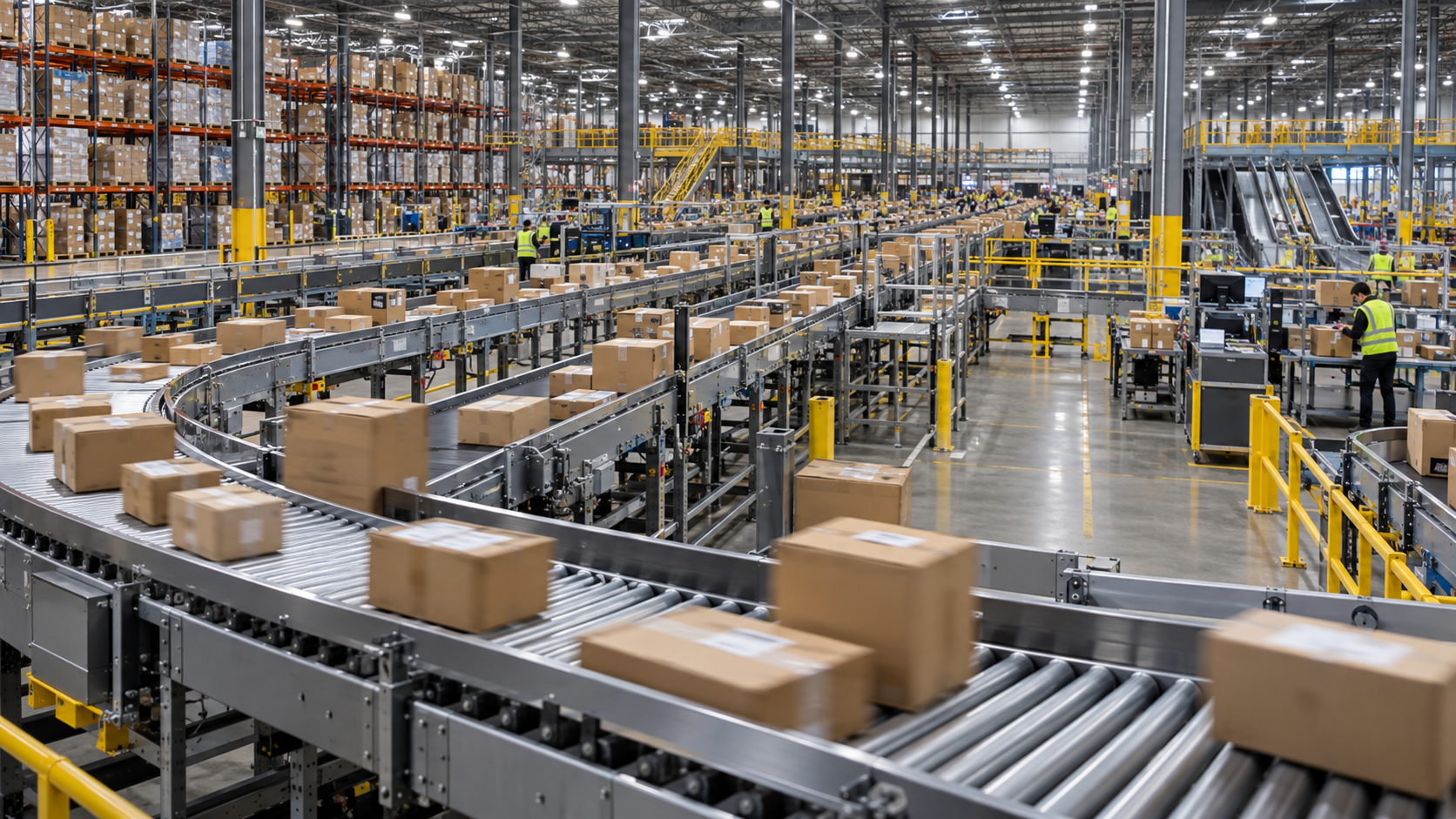
Conveyor Systems We Install for Distribution Centers
Distribution centers run on a combination of conveyor types — each handling a specific function in the overall product flow. Here's what we install and support.
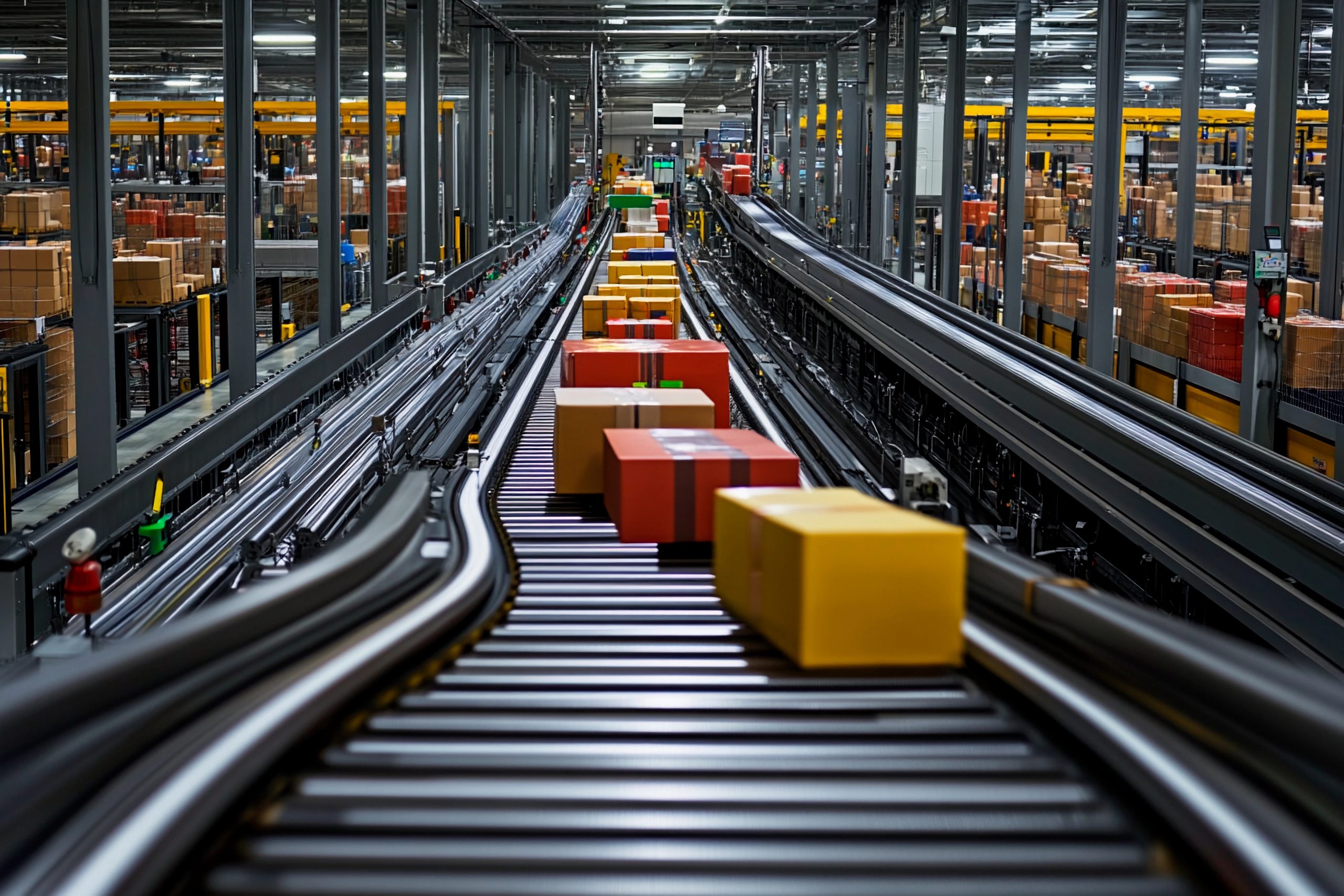
Belt Conveyors
Continuous flat belts for transporting boxes, bags, and parcels across flat or inclined paths. Versatile enough for mixed product sizes and irregular loads — the workhorse of most DC inbound and outbound transport lines.
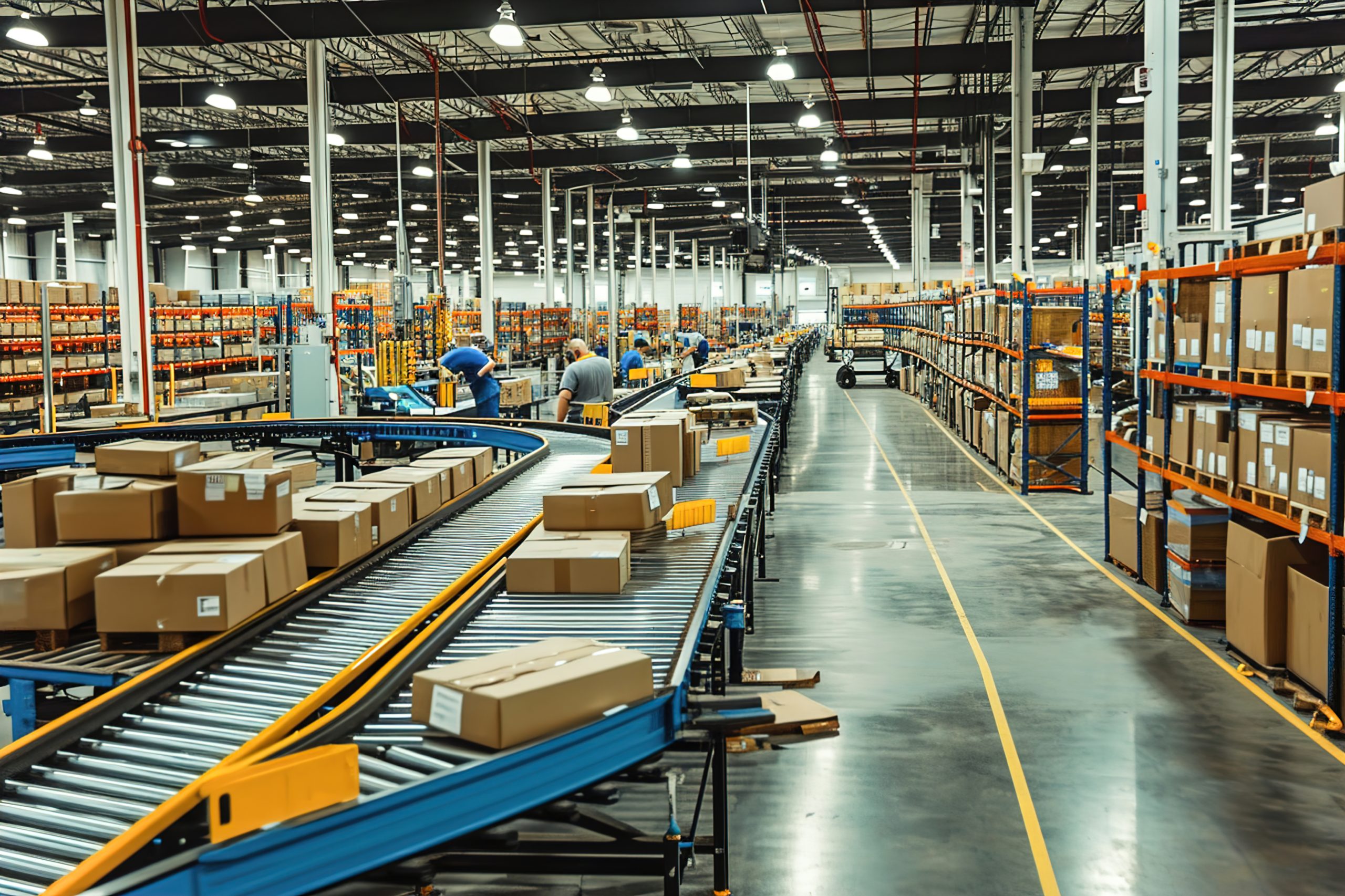
Powered Roller Conveyors
Motor-driven roller systems — including zone-controlled MDR — that move heavy cartons and cases at precise speeds. Zone control allows accumulation, spacing, and gapping without product-to-product contact, essential for automated DC workflows.
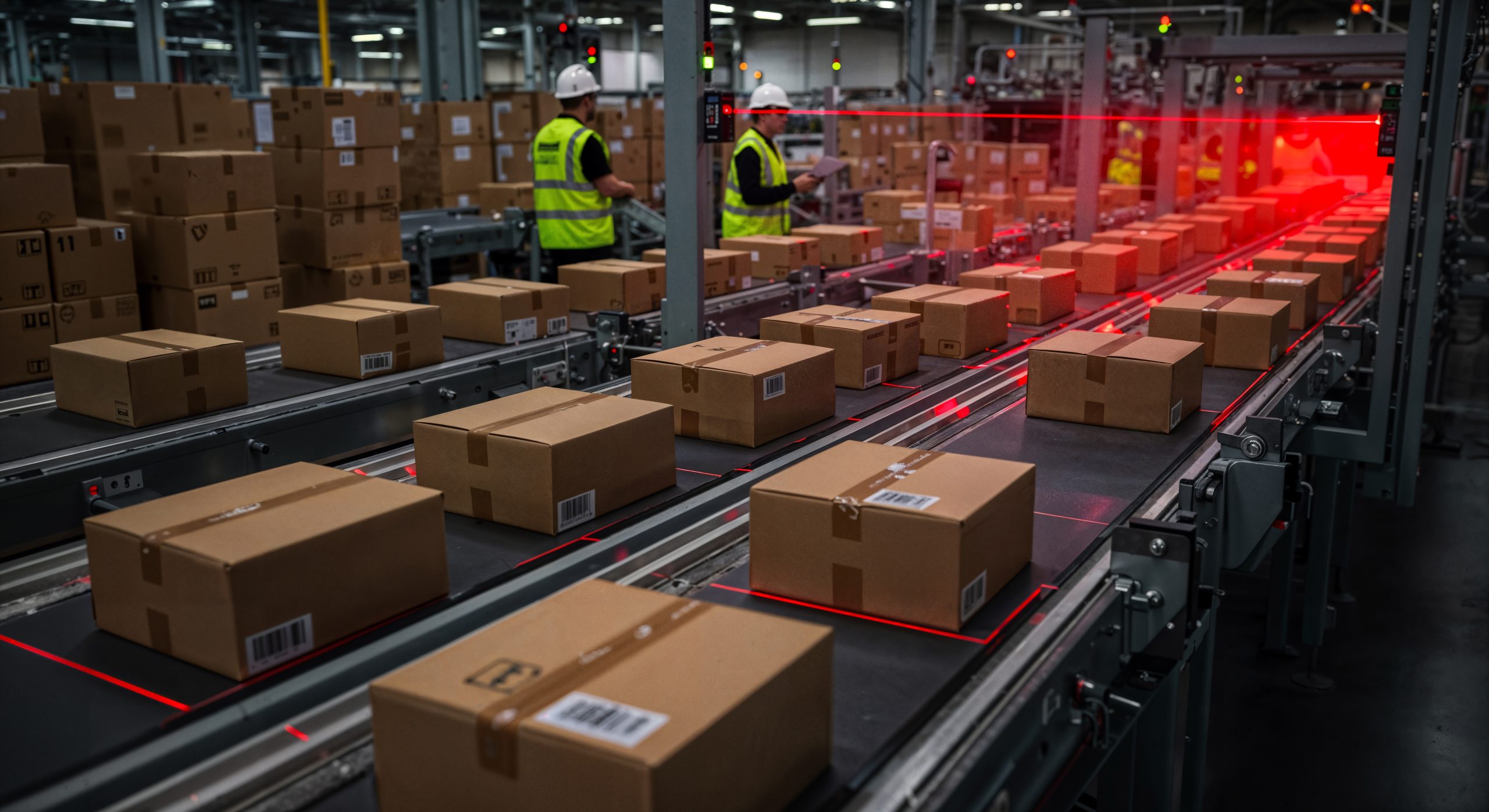
Sortation Systems
Sliding shoe sorters, pop-up wheel sorters, and cross-belt sorters use barcode scanning and automated diverters to route product to the correct lane, dock, or chute at high speed. The throughput engine at the heart of e-commerce and retail fulfillment operations.
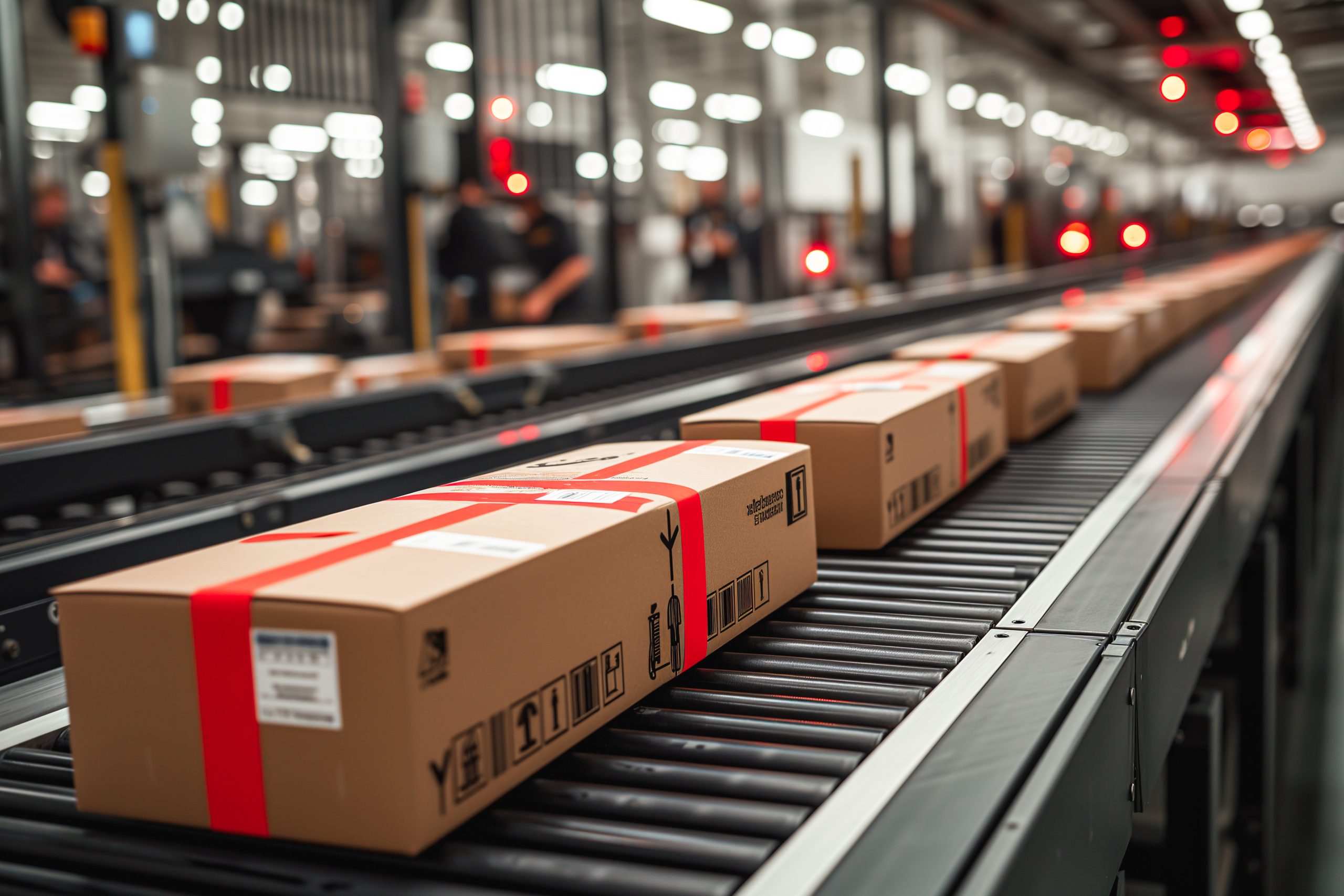
Accumulation Conveyors
Zero-pressure accumulation creates controlled buffers between processing zones — preventing product collisions, smoothing flow into sortation feeds, and absorbing speed differentials between upstream and downstream equipment.
Pallet Conveyors
Heavy-duty roller or chain-driven pallet conveyors move full pallets through receiving, staging, stretch-wrap, and shipping zones — eliminating forklift trips from the flow path and improving safety in high-traffic dock areas.
Telescoping & Extendable Conveyors
Extend directly into trailers and containers for faster, safer loading and unloading at dock doors — reducing manual handling, cutting labor hours on trailer turns, and improving throughput on inbound and outbound volume peaks.
DC Conveyor Maintenance — What a Proper Schedule Looks Like
High-throughput distribution center conveyor systems require structured maintenance at defined intervals. This is the framework our team uses for DC-scale operations.
Daily Checks
- Inspect belts and rollers for debris or product buildup
- Listen for grinding, squealing, or unusual motor sounds
- Verify belt tracking — no drift or frame contact
- Test emergency stop buttons and safety guards
- Clean photo-eyes and verify scanner read rates
- Watch for belt slippage or jerky zone movement
Weekly Tasks
- Adjust belt tension — check for slack or over-tension
- Lubricate bearing points and drive chains per spec
- Inspect roller spin — identify seized or wobbling idlers
- Test conveyor cleaners and scrapers for proper contact
- Monitor alignment — check for idler drift or frame shift
- Remove trapped foreign objects from mechanisms
Monthly Inspections
- Inspect pulley lagging for wear or material buildup
- Check gearbox oil levels — look for leaks or discoloration
- Tighten structural bolts and electrical connections
- Assess belt surface for cuts, gouges, or cover separation
- Inspect drive sprockets and chain for wear
- Review motor amperage against baseline values
Annual Overhaul
- Full belt lifespan evaluation — replace damaged sections
- Drain, flush, and refill all gearbox oil
- Replace worn brushes, scrapers, and wear strips
- Run emergency stop tests under full operating load
- Full-load system performance audit vs. KPI targets
- Electrical fuse inspection and safety circuit testing
Installation, Maintenance & Repair — Under One Provider
Most distribution centers manage their conveyor lifecycle across too many vendors — an equipment supplier, a separate installation contractor, an in-house maintenance crew, and an emergency repair provider who doesn't know the system. Every handoff is a gap.
Affordable Conveyor Services handles all of it under one roof — from initial system design through long-term maintenance and 24/7 emergency response. Here's what that lifecycle looks like:
- System Design & EngineeringCustom layouts built around your DC's throughput targets, product mix, and building constraints — not a template.
- Installation & CommissioningFull mechanical and electrical installation, WMS/WCS integration, run-testing under actual operating loads.
- Preventive Maintenance ProgramsStructured PM at daily, weekly, monthly, and annual intervals — with written service reports and wear tracking.
- 24/7 Emergency RepairTechnicians dispatched around the clock with stocked service vehicles — not just a call center routing to a regional provider.
- Belt Repair & ReplacementOn-site vulcanization, mechanical splicing, Dutchman repairs, and full belt changeouts for all DC conveyor types.
What We Bring to Distribution Center Conveyor Work
24/7 Emergency Response — Stocked Vehicles
When a sortation line goes down at midnight before peak shipping, we dispatch a technician — not a call center. Our service vehicles carry parts inventory so most emergency repairs are completed in a single on-site visit without waiting on a supplier lead time.
WMS & WCS Integration Experience
Modern DC conveyor systems talk to warehouse management and control software in real time. Our installation team has experience commissioning systems integrated with WMS and WCS platforms — ensuring product flow data, throughput metrics, and equipment status are visible from day one.
Structured PM Programs — Written Reports
Every preventive maintenance visit generates a written service report — what was inspected, what was found, what was adjusted or replaced, and what to watch. That documentation becomes your system's health history and the basis for proactive part replacement decisions.
Root Cause Repair — Not Just the Symptom
A failed splice is rarely just a splice failure. Misaligned pulleys, improper tensioning, idler degradation, or debris at transfer points are usually the actual cause. We identify and address the underlying system condition so the same failure doesn't repeat in 30 days.
Connecticut-Based — Fast On-Site Response
Our Southington, CT headquarters puts us on I-84 and I-91 — with fast access to distribution centers across Hartford County, New Haven County, Fairfield County, and the broader New England region. Local presence means faster response and a team that builds facility-specific knowledge over time.
All Conveyor Types, All Belt Constructions
Distribution centers run multiple conveyor types simultaneously. Our team services belt, roller, accumulation, sortation, pallet, telescoping, and spiral systems — and handles all belt constructions from rubber and fabric-reinforced to modular plastic and food-grade. One provider, full coverage.
Full Conveyor Support for Distribution Operations
Frequently Asked Questions
What are the main types of conveyor systems used in distribution centers?
Distribution centers primarily use belt conveyors for variable parcel sizes, powered roller conveyors for heavy cartons and cases, accumulation conveyors for buffering and sortation feeds, sortation systems (sliding shoe, pop-up wheel, cross-belt) for high-speed routing, pallet conveyors for receiving and shipping zones, telescoping conveyors for trailer loading, and vertical or spiral conveyors for multi-level facilities. See our full automated warehouse conveyor systems page for a detailed breakdown of each type.
How do sortation conveyors improve distribution center speed?
Sortation conveyors use barcode scanning, photo-eye sensors, and automated diverters to route packages to their correct lane, dock, or chute without manual handling. A single sortation line can process thousands of items per hour at consistent accuracy — dramatically reducing labor dependency and order fulfillment errors compared to manual sorting. The integration with WMS software means routing decisions happen in real time based on live order data.
What is a warehouse conveyor system?
A warehouse conveyor system is an automated or gravity-powered mechanical setup used to move goods, cartons, and pallets safely and quickly across different areas of a facility. Modern warehouse conveyor systems integrate with warehouse management software (WMS) and warehouse control systems (WCS) to provide real-time visibility into product flow, throughput, and inventory location. They range from simple gravity roller systems to complex automated sortation and fulfillment lines.
How often should distribution center conveyor systems be inspected?
DC conveyors require daily visual checks for debris, belt tracking, and emergency stop functionality. Weekly tasks include belt tension adjustment, bearing lubrication, and photo-eye cleaning. Monthly inspections cover gearbox oil levels, structural alignment, drive chain wear, and safety guard verification. Annual overhauls include full belt replacement assessment, gearbox oil changes, and load-performance benchmarking. Our preventive maintenance programs are structured around these intervals and tailored to your specific system and operating intensity.
What are the 7 types of maintenance used for conveyor systems?
The seven types are: (1) Preventive — scheduled tasks on a regular calendar; (2) Predictive — uses sensor data to forecast failure; (3) Corrective — repairs small issues found during inspections; (4) Reactive — fixes equipment after it fails; (5) Condition-Based — performed when monitoring data reaches a threshold; (6) Emergency — urgent unplanned repair; and (7) Deferred — non-critical tasks intentionally delayed. Most high-throughput distribution centers operate on a combination of preventive and condition-based frameworks to balance uptime and maintenance cost.
What are common causes of conveyor belt failure in a distribution center?
Common causes include belt mistracking from misaligned idlers or pulleys, overloading beyond rated capacity, improper tensioning, splice failure, seized roller bearings causing heat damage, debris buildup at transfer points, and end-of-life wear. Most failures give early warning signs — unusual noise, visible drift, or amperage spikes — that a structured preventive maintenance program catches before they become unplanned shutdowns. Our technicians also address the root cause, not just the visible symptom, so the same failure doesn't repeat.
Can Affordable Conveyor handle both installation and ongoing maintenance for distribution centers?
Yes. Affordable Conveyor Services provides full-lifecycle support — from initial system design and installation through structured preventive maintenance programs and 24/7 emergency repair. Our Southington, CT headquarters serves distribution centers across Connecticut and New England. Call (860) 342-8753 or contact us online to discuss your facility's needs.
Full-Lifecycle Conveyor Support for Distribution Centers & Fulfillment Operations
From initial system design through long-term maintenance and 24/7 emergency repair — our Southington-based team is built to support the throughput demands of high-volume distribution operations across Connecticut and New England.
Talk to our team
Request a site assessment or reach us directly — we'll scope the right solution for your DC fast.
24/7 Direct Line (860) 342-8753